
Along the escarpment
On psychogeography, deep topography and a liminal corner of Oslo

Considering my publication/newsletter/whatever is called Psychogeographically, I have written very little about psychogeography in the short month since my first post was published. It is time to, in a way, rectify that. While taking you along on a short walk just outside my front door.
Wikipedia defines psychogeography as “the exploration of urban environments that emphasizes interpersonal connections to places and arbitrary routes”. Whereas Guy Debord himself, who invented the term back in 1955, defined it as “… the study of the precise laws and specific effects of the geographical environment, consciously organized or not, on the emotions and behaviour of individuals.”
It has since then come to mean a lot of things to a lot of people. Personally, I feel most connected to the British tradition of psychogeography, where it has taken on a less intellectual and more practical meaning. It has become about the experience of landscape, both urban and rural.
Though not religious as such, it has often adopted a sort of spiritual language to describe what it is about. Terms like “the spirit of place” or “the soul of the city” has an almost mystical ring to them. And when used about pylons, cars parks or suburban back streets, that can seem both silly and pretentious. And I suppose it is both to some degree.
But understood foremost as terms used to try to describe the experience of place, it perhaps says most about the limitations of human language. We simply do not have words outside of religious language to describe the feelings a place can instil in us, if we stop treating it simply as a place to pass through, and embrace the feeling of being in it.
As an atheist of both conviction and profession, I consider reclaiming this language from organized religion a good thing in itself.
Among the many books on the subject I have read over the years, none is better at transferring the mystical experience of place into language than Nick Papadimitriou’s Scarp. First published it 2012, it carries the descrpitive subtitle In Search of London’s Outer Limits. To quote a short academic article about the book:
“Scarp is Papadimitriou’s name for the North Middlesex/Sout Hertfordshire escarpment; this land feature that delineates the Northern margins of London is where he has spent most of his life, and with this book, where he entangles and disentangles his life and the geography of Scarp that surrounds him. Scarp gives Papadimitriou the title of his book and is his exploration into place and psyche, how man and landscape constitute each other. The book is part memoir, part investigation into a particular geography, and part archive of regional memory.”
It is a book about margins. About the fourteen-mile escarpment on the northern fringes of London, where Papadimitiou himself lives in a flat in Child’s Hill. (At least at the time of writing the book.) It is a book about the kind of suburbia that often gets overlooked, because, though an integral part of any big city, it is neither entirely urban, nor rural. It is, in short, suburban.
But it is also a book about a life on the margins. About growing up as someone who, though never clearly stated, comes across as not neurotypical. It is a book about being an outsider, and how his reactions to the world around him, in the end lands him in prison. In the end, as in, that is where the biographical aspect of the book ends.
It is at times quite sad.
Today, or at least at the time of writing the book, Papadimitiou is the foremost spokesman for what he calls “deep topography”. Which, to quote the long dormant blog Rich Pickings, is “indistinguishable from being a psychogeographer except that it sounds marginally more marginal”.
Papadimitiou has cooperated with people like Will Self, Iain Sinclair and Russell Brand (before Brand went gaga). And he was the subject of the film London Perambulator, by the walking bard of London, John Rogers. Rogers’ 2013 book This Other London. Adventures in the overlooked city shares some of the subject matter of Scarp, though with a very different approach.
When not biography, Scarp is a venture into Papadimitriou’s deep topography. An exploration of and meditation on the landscape of the scarp. That deep topography at times goes deep in the literal sense. As many psychogeographers he is somewhat obsessed what lies beneath the city. There is a reason while the lost rivers of London have become something of a symbol of the psychogeography of the city. (And protagonists in Ben Aaronovitch’ series Rivers of London, that has a large psychogeographical aspect to it.)
But Papadimitriou’s deep topography is also deep in the sense that it goes far back in history. Something London and its historical surroundings is very rich in. (At least seen from comparatively young, millennia old Oslo.)
And at times it veers into the truly mystical, experiences part fiction, part revelation, part psychedelia. They are what takes the book beyond both biography and psychogeography, and into the spiritual.
If I haven’t made it clear yet, this is a recommendation. Scarp is a truly good book. And very much one of a kind. But how is it relevant to the photos in this post?
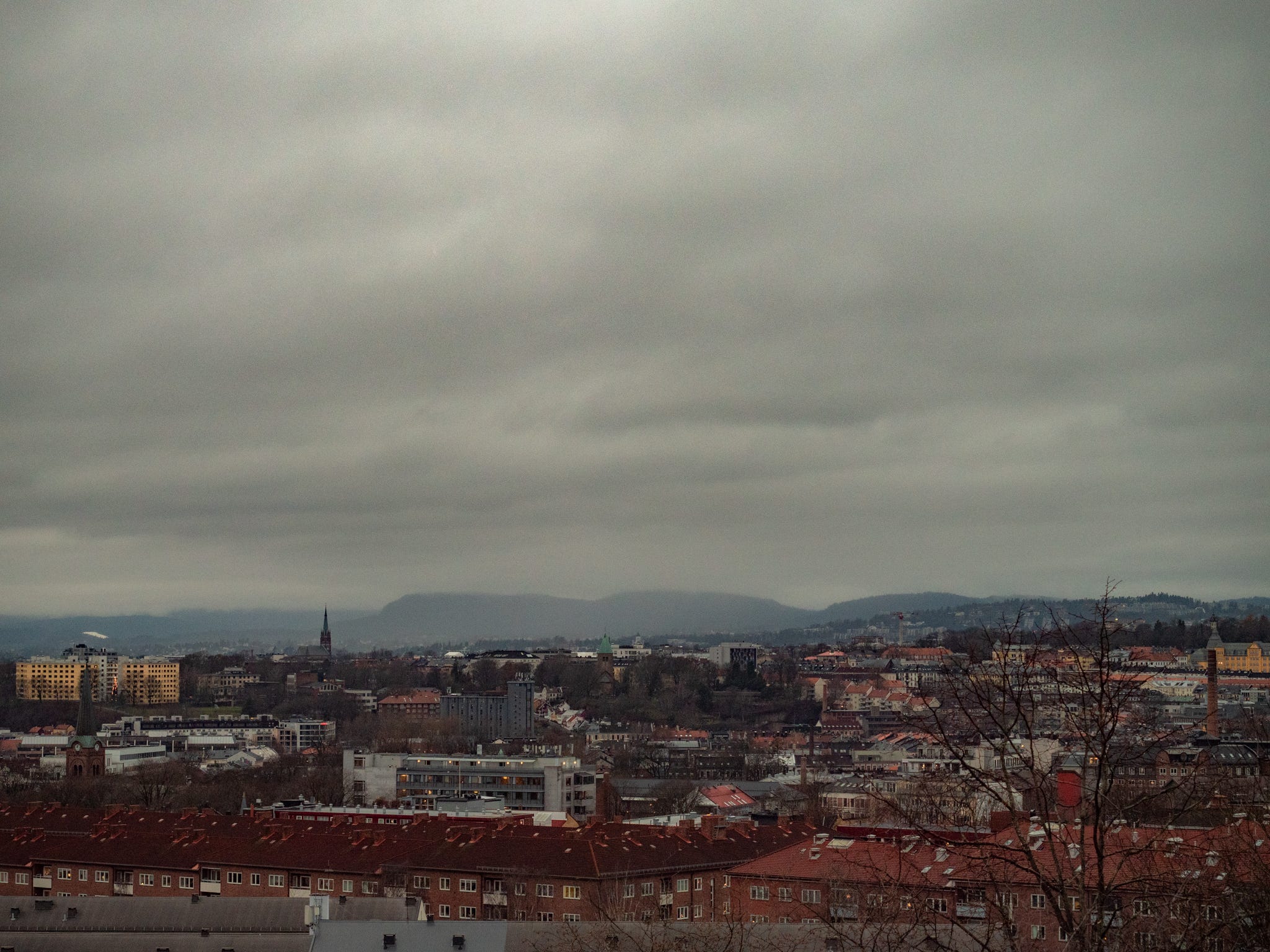
I’m afraid there is nothing mystical about that connection. It just so happens that I live on something of an escarpment myself. A granite part of Oslo, that rises above the inner eastern part of the city, and runs from Vålerenga in the south-east to Sinsen further North. About three kilometres as the crow flies.
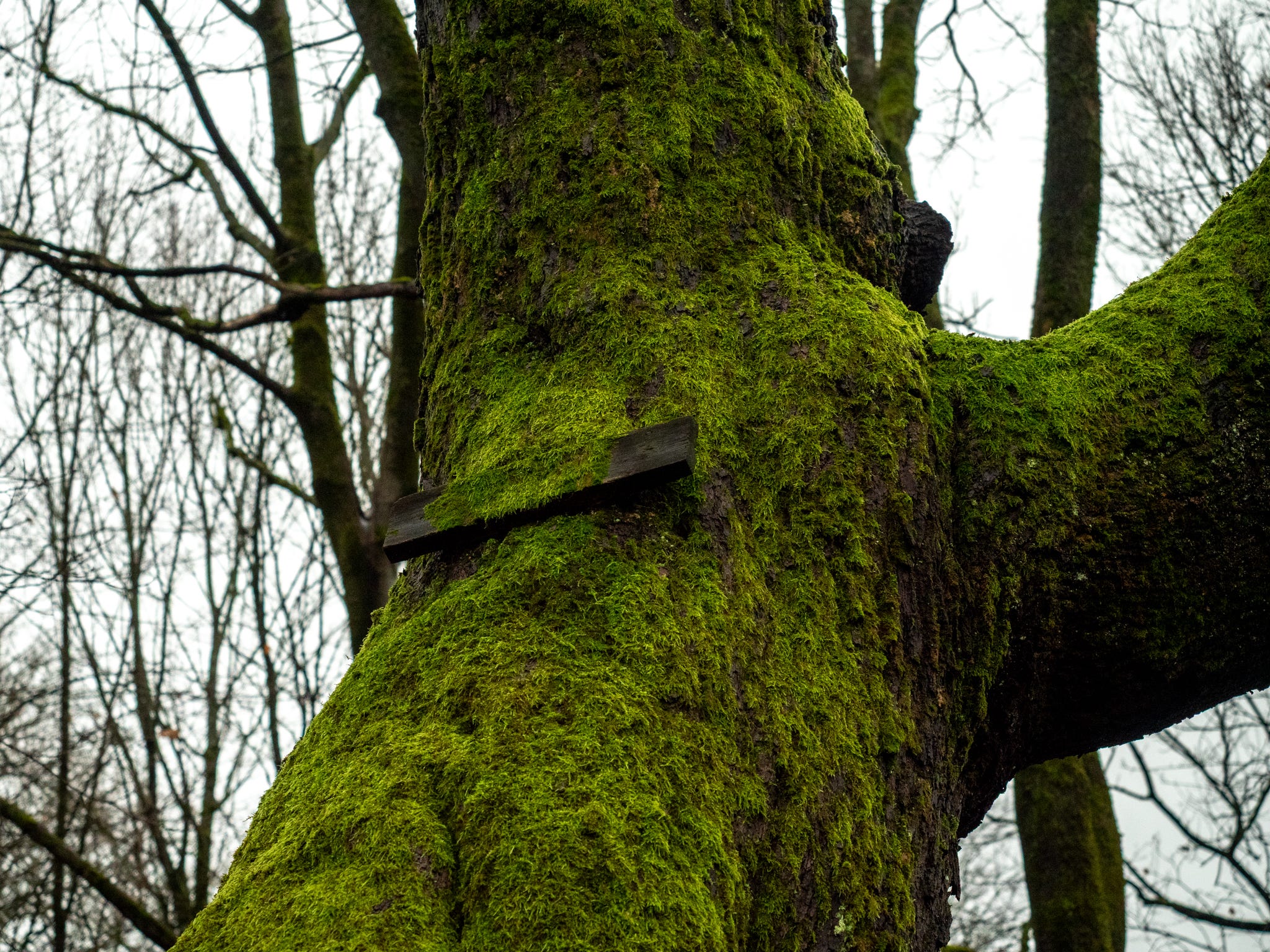
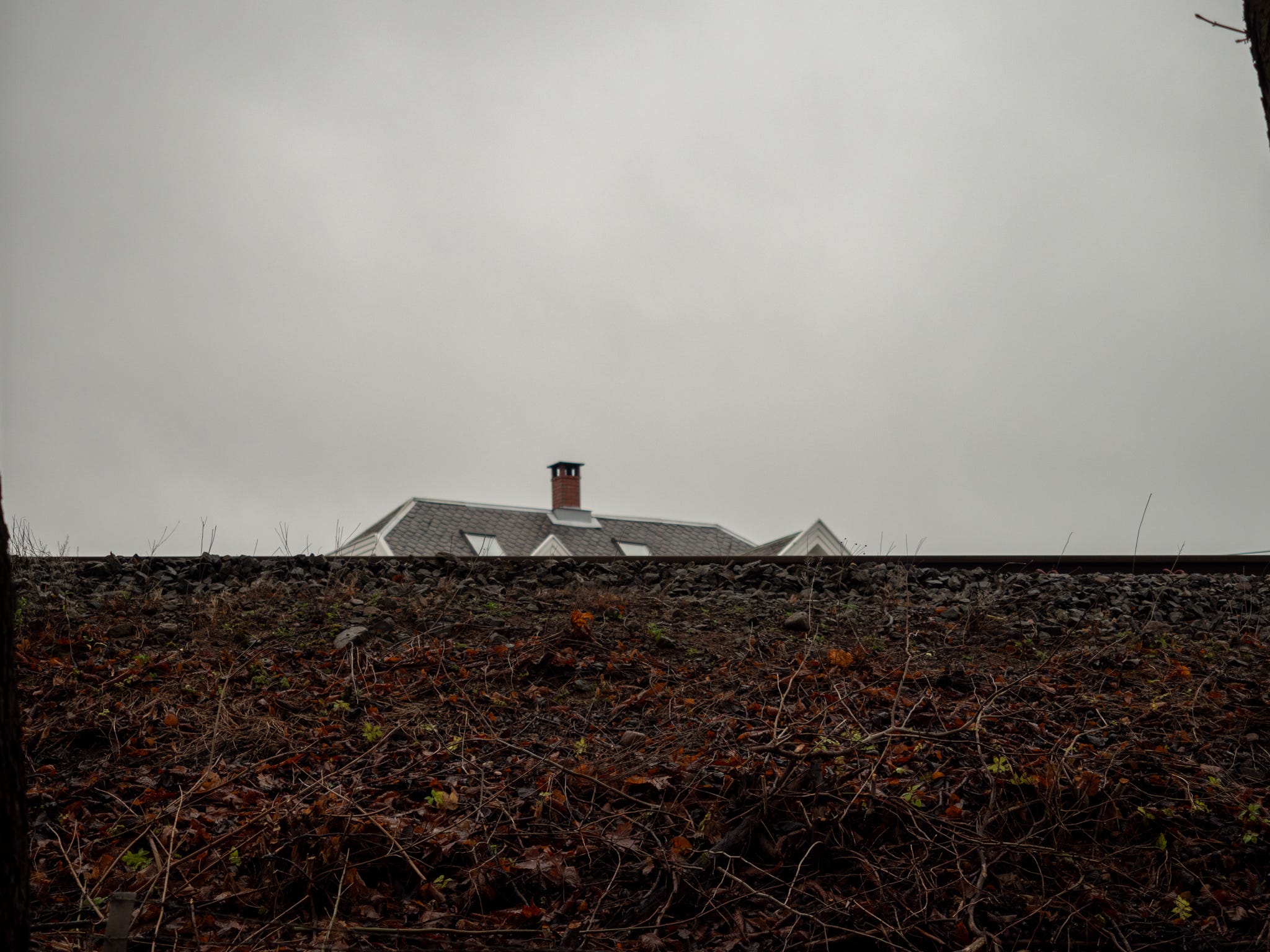
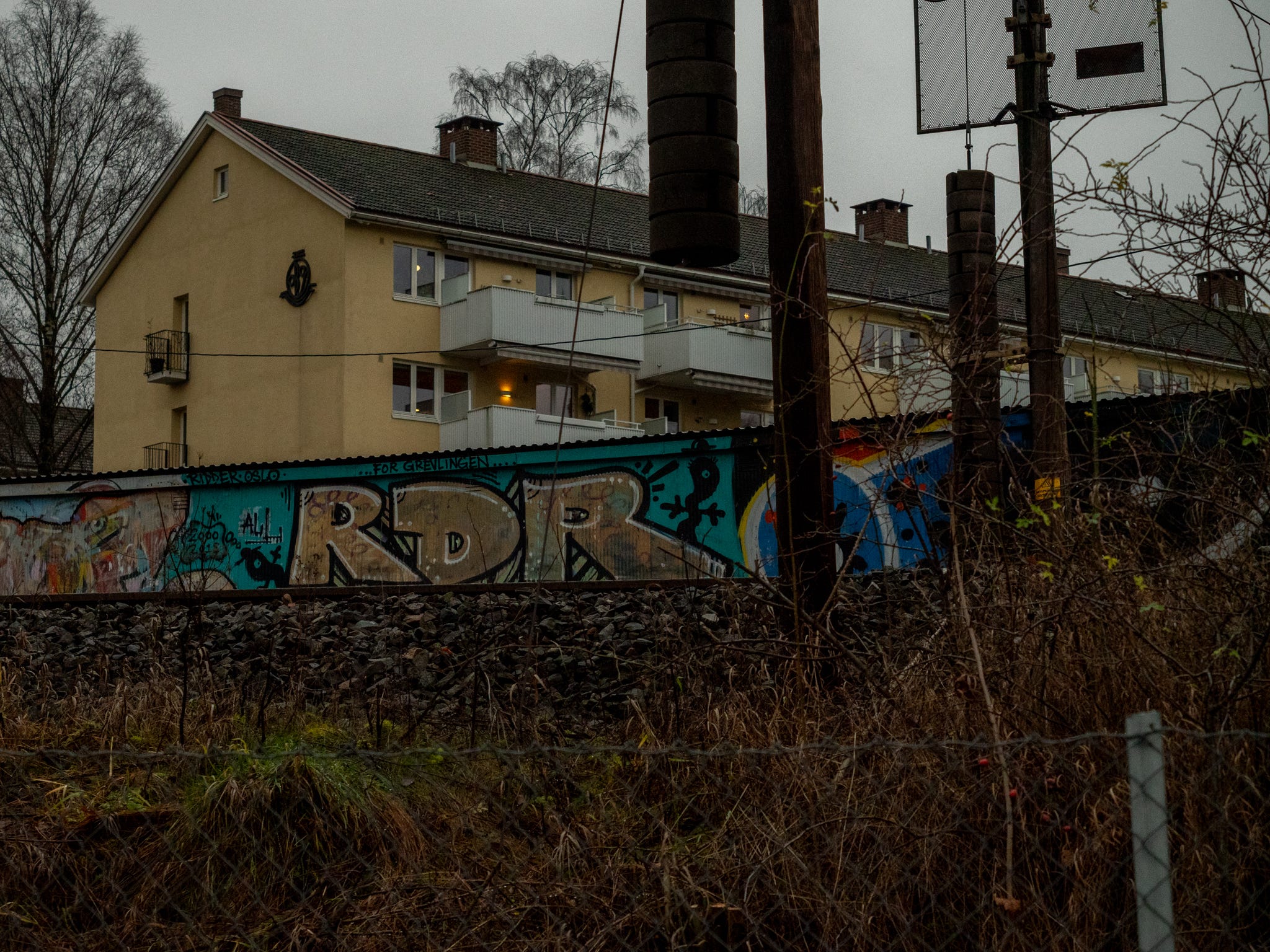
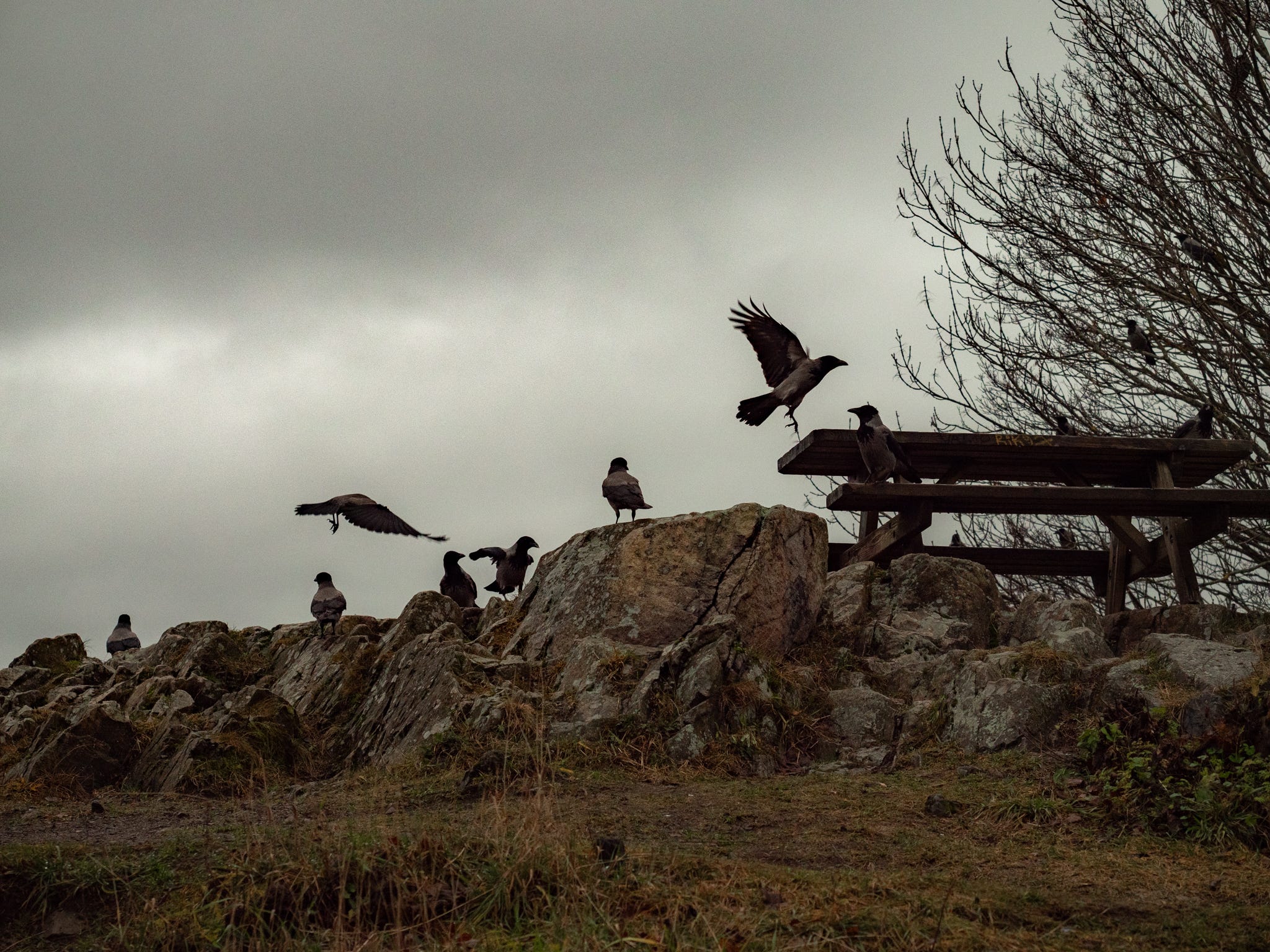
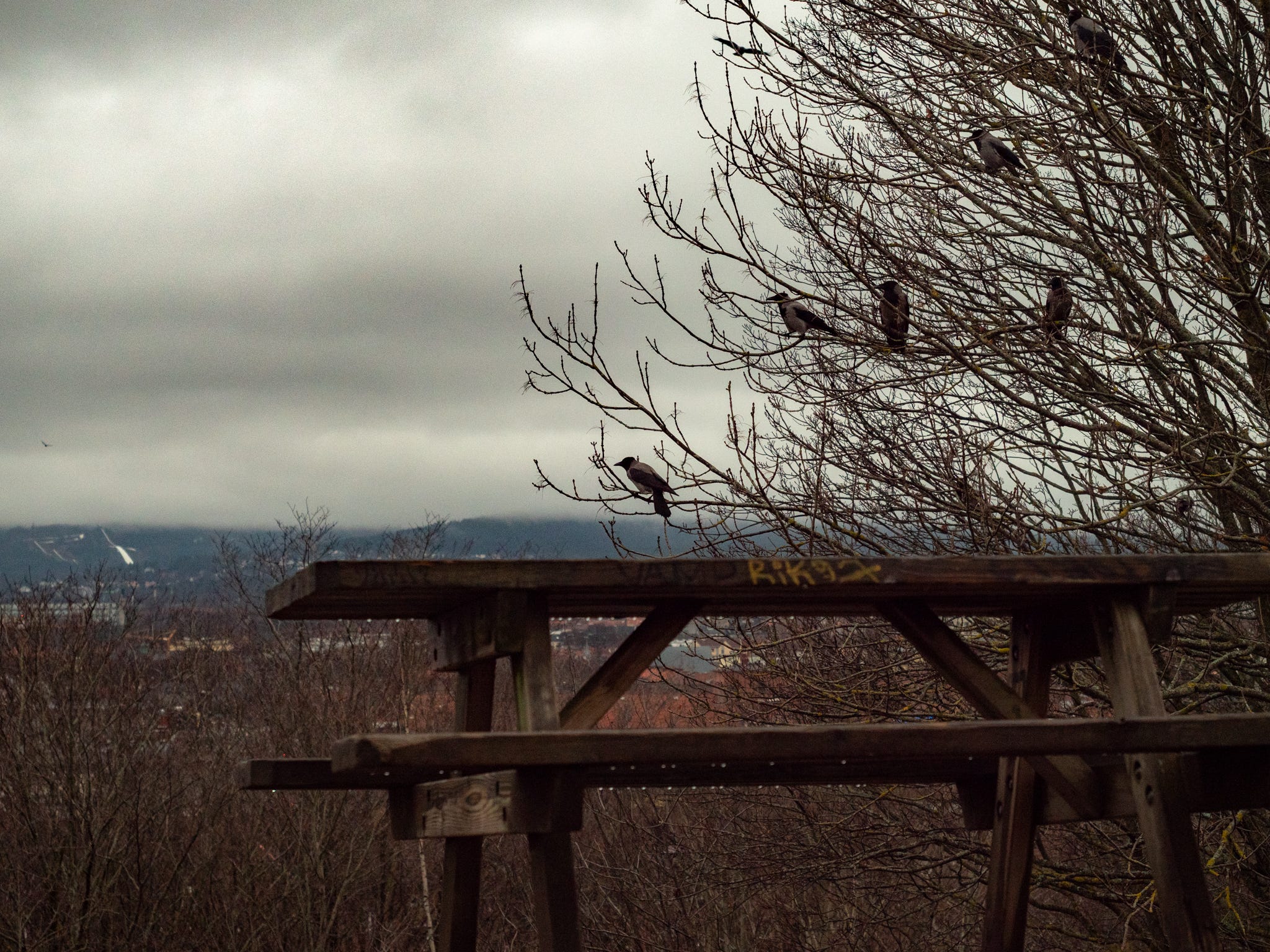
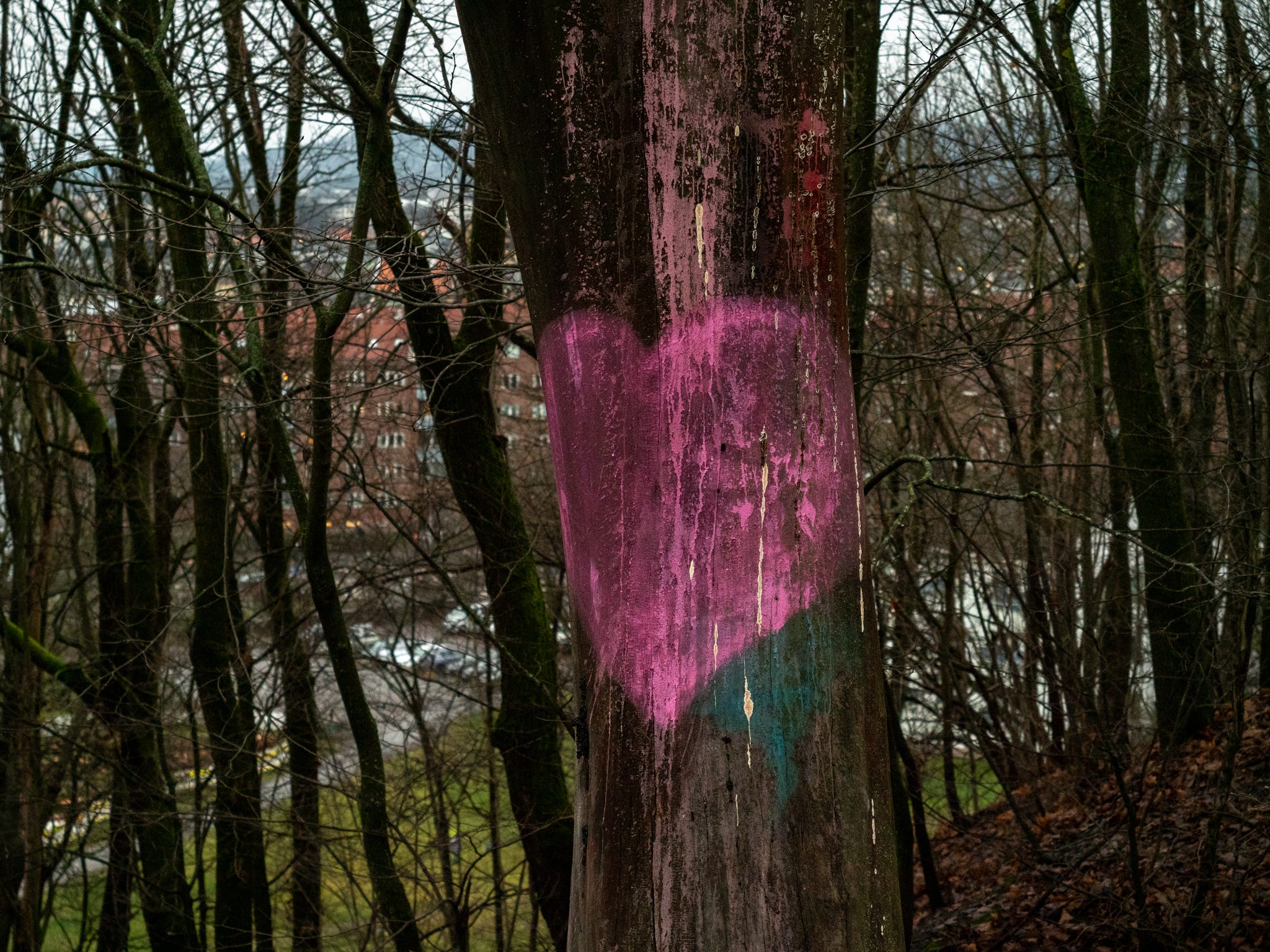
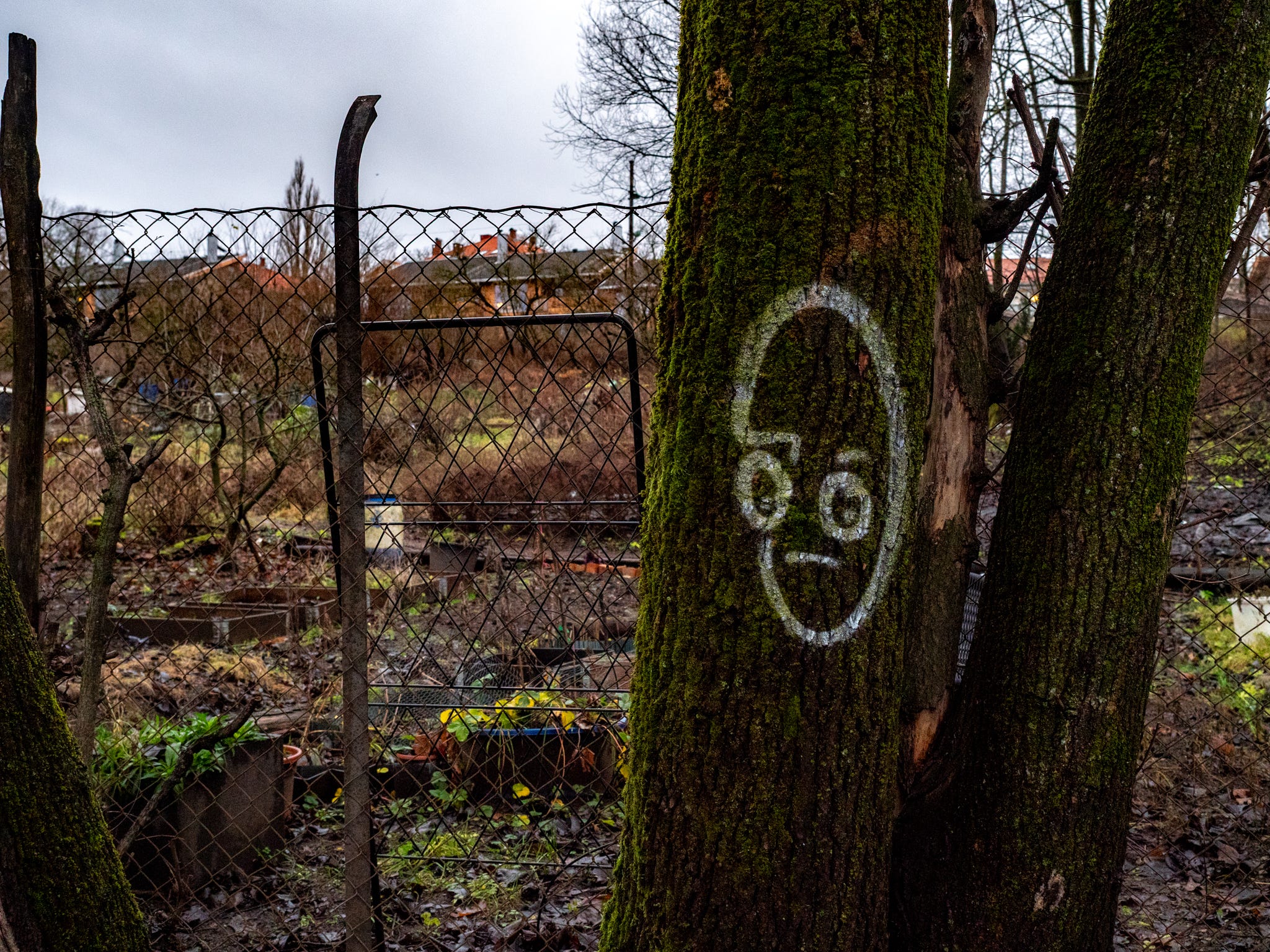
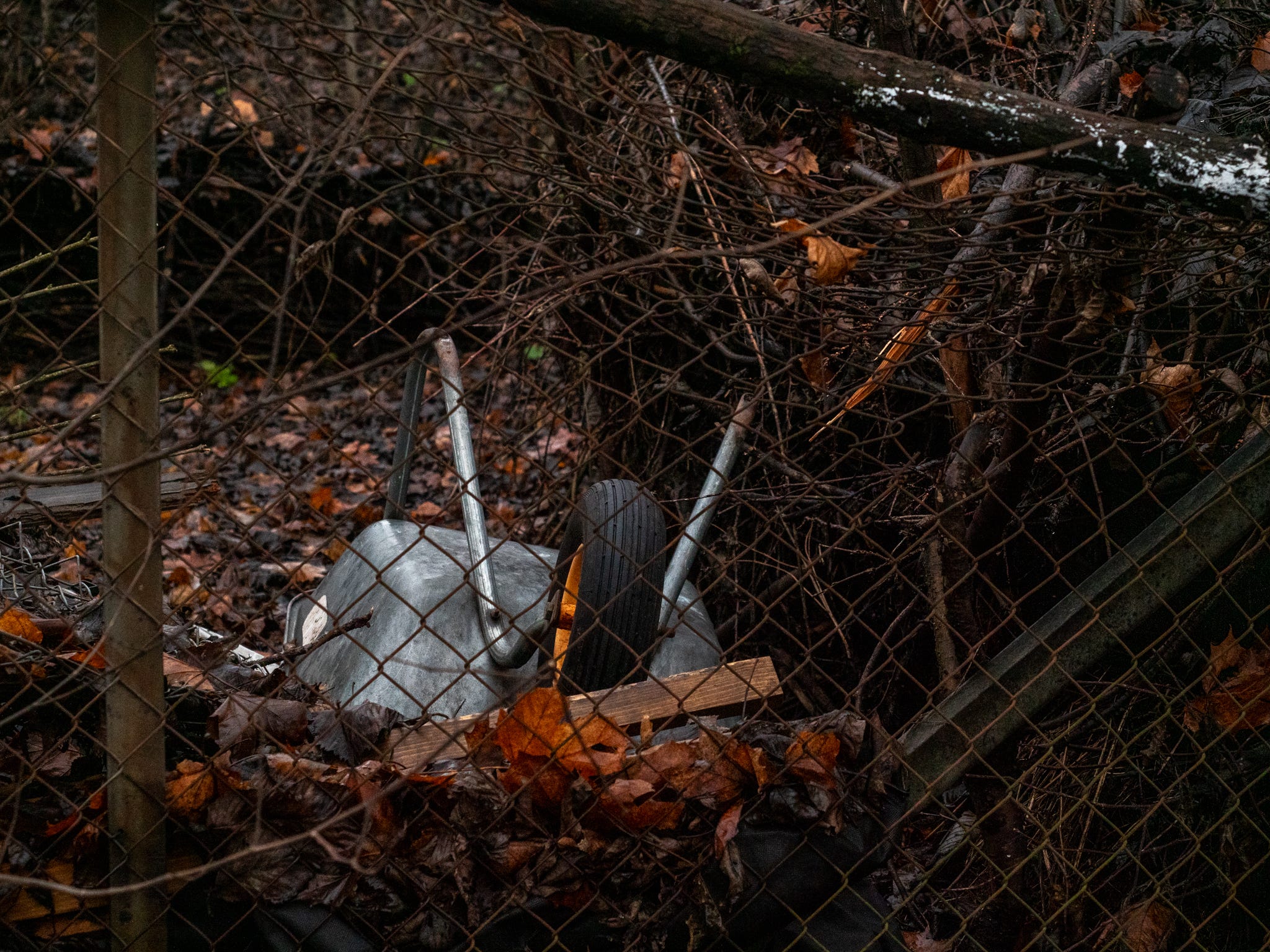
These pictures are from the first Sunday in December, when I set out on a longer walk, that took me to the end of the escarpment, and then down into the far east of inner Oslo. It took me a while to figure out what to do with the photos. In the end I landed on splitting them up.
These photos are all from the first part of the walk. About a kilometre along the top of Tøyenparken – The Tøyen Park. They simply worked better on their own, than in company of the photos from the way more urban parts that followed.
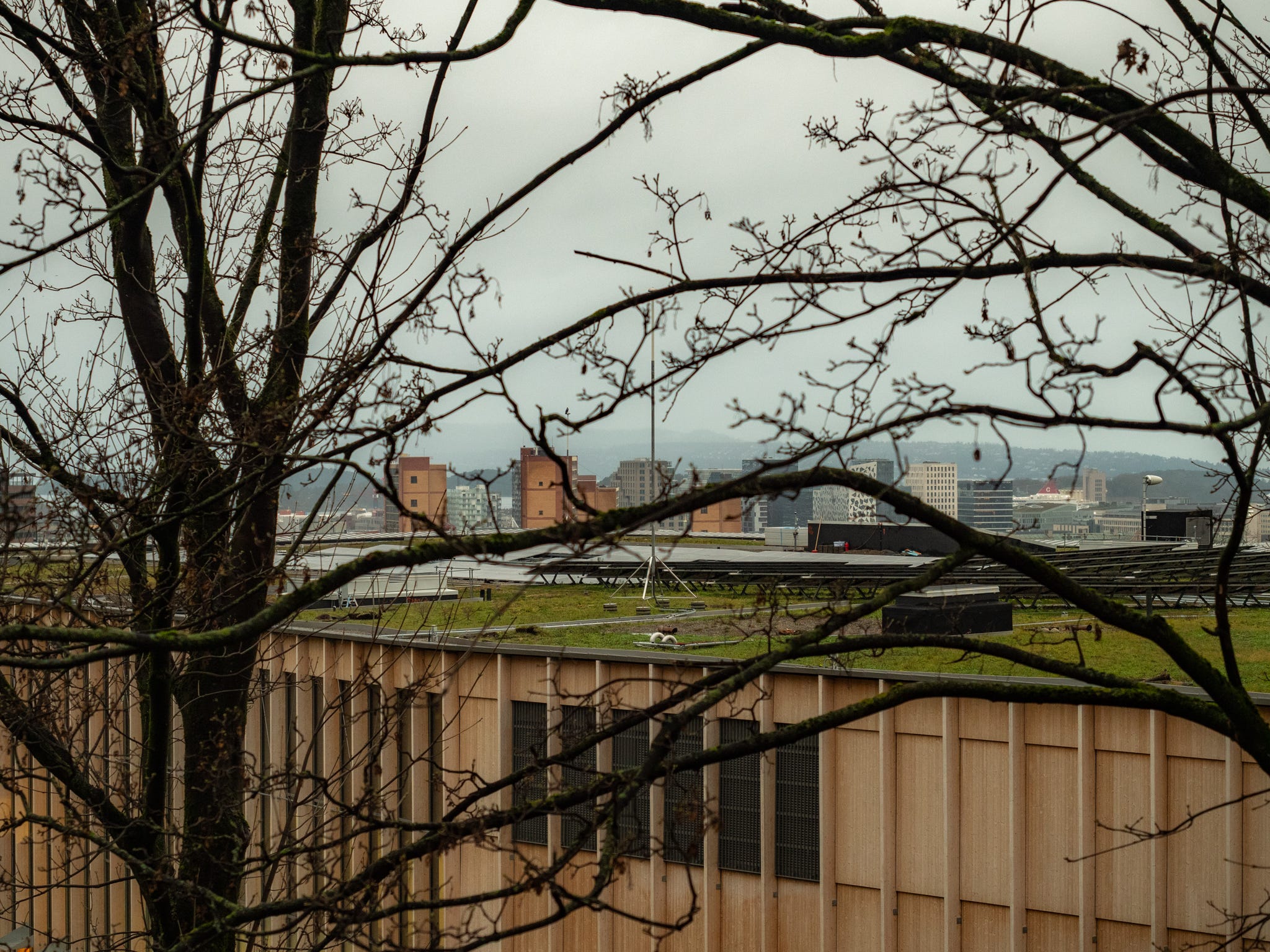
There is an isolation to this part of the city. A liminality, to use a phrase beloved by those into psychogeography as practice. It is both in the city, and not of the city. Not rural, of course, but an island of nature in a sea of bricks and concrete.
And the edge of the escarpment is here so steep that it is quite hazardous, though not impossible, to manouvre up or down it. So it is cut off from the inner city. At the same time the railway line that makes its way into the first photos, cuts it off from the outer. It is a small world of its own.
It also happens to be one of the ways I often take to work, so it is one I know very well. I have taken literally hundreds, perhaps thousands, of photos on this little stretch of scarp. Some of them I’ll even venture to claim have caught something of the soul of the place.
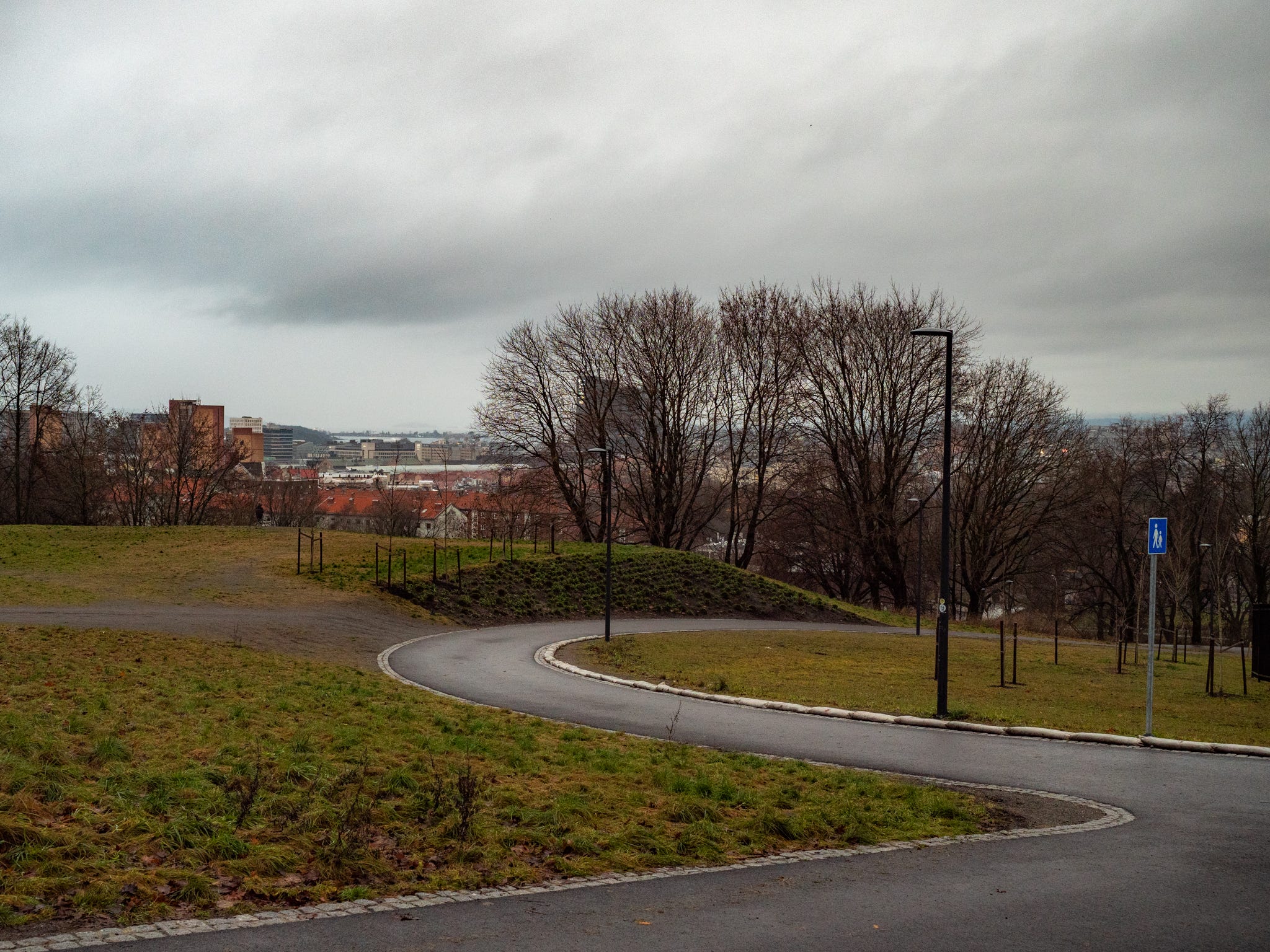
My photographical approach to psychogeography is very much not in line with Papadimitriou’s own tips for how to do deep topography, though. Number three on his list is:
“Go out on your own without any maps and without a digital camera. Digital cameras are the death of the imagination.”
I suppose I disagree with that one.
This is a really interesting way to ground the idea in real life instead of just theory. Walking it out makes psychogeography feel more personal and easier to understand.
A most enjoyable ‘read’. Do you know the book ‘Edgelands’? https://www.theguardian.com/books/2011/feb/19/edgelands-farley-symmons-roberts-review